
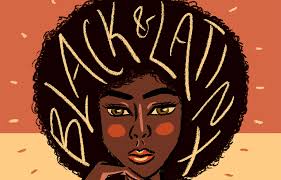
WEEK 2: Politics and Sexuality: The representation of women in the political world is sometimes very hard to find, but when we do find it, that representation may be less than what we would hope for. Seeing the progress that Mexico has made is a wonderful site to see. In the recent years, Mexico has made a breakthrough in the representation of women in their legislative. The strict rules and gender quotas imposed by Mexico have helped create the rise of 49% of women in Congress and 51% in the senate. This large representation of women in this country is a turning point for not only Mexico but Latin America as a whole. Research suggests that women in the Mexican Congress care more about rights, equality and social justice than men. With this research in mind, Mexico in turn hopes that women will create a brighter future for the country. However, there is an area that Latin America still fails to represent. The Indigenous and Afrodecendents of the region are still not seeing very much progress. Latin America is very active in trying advance women’s rights but fails to realize that there is more than one kind of women. There is a growing number of women joining the field, but the majority of those women are fair skinned and speak Spanish. Where are the darker and minority women? Indigenous women and women of Afrodecent very much lack representation in Latin America. The region wants advancement but is still leaving many cultures out of the mix, “we want women, but a certain kind of woman.” This is not advancement. This is still ignorance.
WEEK 3: Gender Violence: Imagine living in a place where being a woman was the worst thing you could be. Hatred is nothing new but being extremely hated because you are a woman is a real thing. In many cases around the world, women are treated as lower class citizens. Feared and hated by men. This hate turns into a giant femicide, a genocide geared toward women. Women have to hide and be careful where they go because of this hatred. Gender violence, especially amongst women, shapes the way women walk around during the day, determines what they wear, how they act, and who they can trust. In Latin America, during Guatemala’s 36-year civil war, rape was a tool used to strike down the opponent. In many cases of war, rape is a common weapon. Women are always targeted because woman are the ones producing the next line. In war, this is how the opponent cuts that line off. In Peru, the government themselves decided that it would be better if women were sterilized. The National Family Program thought this was the best way to keep their population under control. Thousands of women were forced to have this procedure done and what was the outcome? Pain and death. Ensuring that the people responsible for these actions are condemned is a good way to show that these actions will be punishable, but are these laws necessarily stopping the violence? It is a good start I will admit. If these acts were not being proven to be punishable then the violence would continue and become even worse than it already is. Laws need to be more prominent when it comes to crime against women. A woman is a gift and the world should realize this.
WEEK 4: Latin American Women and the Myth of (Colonial, Cultural) Patriarchy: Why is it that in Latin America when a woman commits adultery it is a far worse crime than if a man were to do it? According to New World Orders: Violence, Sanction and Authority in the Colonial Americas by John Smolenski and Thomas J. Humphrey, “the difference in the perception of wives and husband’s adulterous activities was based on property rights. Because all children a married woman gave birth to were considered legitimate and shared equal inheritance rights to her and her husband’s private estates as well as to their community property, should a wife give birth to another man’s child, that child would illicitly gain rights to property.” The same would not happen with the husband. Were these rules and laws molded towards women? Were women targeted when it came to the creation of these laws? Around the world you see this trend that laws revolving around marriage, children and custody were aimed toward women. Men hold superiority over women, and it is blatantly obvious when you look at many places you travel to. However, as people we tend to put another culture on blast about certain problems such as the oppression of women, more than our own. As westerners we have a habit of blaming a certain culture for these situations rather than admitting it is the world as a whole who creates these problems. Oppression is everywhere and, in some places, that oppression is worse than everywhere else, but we need to ask ourselves the question of whether or not blaming a culture for this oppression actually oppresses them as well? Is that beneficial or does that make the situation worse.
WEEK 5: Women and Nation: Women have been involved in wars and battles much more than it has been depicted by the stories that are being told. Women have taken up arms and fought side by side with their fellow men. The Mexican Revolution had groups of armed women, many being high ranking officials. Yet, they are simply glanced over. The roles that were expected of women during times of struggle for independence in Spanish America were to be “virtuous daughters and sainted mothers.” The way history keeps women alive is by sexualizing them. Manuela Sáenz for example was remembered as being Simón Bolivar’s lover. Always belonging to the man and being introduced as a man’s this or that rather than just by our names. Women have always been seen as emotional. They thought back then, and probably still today, that women should have an education in order to help control their emotions. Either way, women are still seen as being easily angered and crybabies. Simón Bolivar himself believed that women should not be involved in political affairs. It is improper and un-lady like for women to be involved in such things. This is why in many wars, such as Colombia’s War of Independence, women are unacknowledged. The interesting part however was the proudness political leaders felt when they were being supported by women. In Hidden Histories of Gender and the State in Latin America by Elizabeth Dore and Maxine Molyneux, it said that “revolutionaries were very proud of any support offered to them by groups of women because female support was considered an indication of the naturalness of their philosophy: even untutored women could see the truth.” I really do not know whether I should be offended or flattered.
WEEK 6: Women’s Labor: Women have always been seen as people made for pleasure and reproduction. During and after World War II in the United States, women started working in order to fill in positions when the men went to war. Women became nurses, receptionists and care givers outside of the home because there was a need for people in these fields. When it came to Latin America, the women were playing similar roles but more on the side of making sure the men were being cared for, “the work that goes into keeping body and soul together day after day” (Putnam 134). Women in Latin America were still needed as house keepers and care takers. Before World War II, women were needed and expected to be at the home in Latin America. Women were not workers. They were considered “nonworking” housewives. Expected at home, taking care of the children, cleaning the house, and preparing an extravagant meal for when the husband returns home. During and after World War II, the same was expected of women, but they were also expected to do much more. World War II affected Latin America tremendously. The United States was creating companies all over Latin America and it was also asking for workers to come over to the states because of the labor the country had due to the war. Women had to fill in for jobs as well as make sure that the country was staying stable. Even though women were taking on these, what was considered, more important roles, they were still not seen as being as hard working as men.
WEEK 7: WOMEN AND CITIZENSHIP: In Mexico, during the Mexican Revolution, Amelio Robles wanted to fight for his country. He wanted to fight for his country just like many other men who were taking up arms, but the only way he was going to be able to do that was by turning himself into a man. This was a common thing for women to do all over the world; to dress up like a man in order to fight side by side with the rest of them. Only he took it a step further. Amelio Robles did not change his appearance just for the sake of the war. He also did it because he was not comfortable in his womanly skin. The Unconcealable Realities of Desire: Amelio Robles’s (Transgender) Masculinity in the Mexican Revolution written by Gabriela Cano, was not a story that explains gender roles in Mexico. This was just one person’s story. Amelio had a different experience going through his transgender phase than other people in Latin America, let alone the rest of the world, have had to go through. In the book, Gabriela Cano states that “male homosexuality rejected masculinity and was considered a betrayal of fundamental nationalist values. Robles’s transgendering, on the other hand, enjoyed relative tolerance precisely because it exaggerated the masculine values exalted by the civil war.” Amelio was still not fully excepted, but for the most part was tolerated. So, he has a different story then many trans men or women around the world. This story then does not give us the information about gender roles in Mexico, especially in that period where many things were not tolerated.
WEEK 1 (April 6-10): Gender in Populism and Revolution: The separation of church and state is non-existent in many areas including Latin America. Catholicism is the predominant religion across Latin America and has been influential in the laws that have been and are being put in place. According to Sandra McGee Deutsch’s reading “Gender and Sociopolitical Change in Twentieth-Century Latin America,” she makes a comment regarding the emancipation of women from certain institutions, “of the church, which had tamed women into accepting their lot.” The home life of the family worked its way up to the government level. Women were the ones who stayed at home typically and the government took that into consideration of them not needing to participate since they are home bodies. This is explained by Sandra McGee Deutsch in the same reading, “the second part of Scott’s explanation also suggests that one cannot separate politics from gender. Throughout history, people in all social ranks have comprehended, interpreted, and justified authority relations in society by referring to what is close to them and readily understandable, namely authority relations in the home.” In Argentina during the reign of Juan Perón, his wife Eva Perón portrayed her leadership skills while at the same time made sure people knew she was the subordinate of her husband. This in turn made them more powerful in the eyes of the people. It is an interesting tactic that Eva had used. To prove her power but to make people, including her husband, think that no matter how powerful she was, her husband is more powerful. A tactic that makes even the fiercest women look as if they can be tamed. Although, it is a sad concept knowing that a country could feel more at ease believing this kind of claim.
WEEK 2 (April 13-17): Women in Cold War Politics: It is amazing what a woman, especially a mother, can do. There have been and still are many feminist groups around the world fighting for basic human rights. One of the most famous women led movements would have to be the Mothers of the Plaza de Mayo. They created an amazing movement that fought against the dictatorship government of Argentina. They wanted their children back and they were not afraid to make noise in order to do so. Thousands of people were disappearing, but they still marched the Plaza in front of the presidential palace. Another mother/women led movement known as Co-Madres was a group in El Salvador who fought against the Salvadorian government. They went against the army and death squads in order to hold people accountable for the violence they put innocent civilians through. Especially during these time periods, women were seen as the weak links of society, but here you see the strength they possessed going against governments who did not discriminate when it came to who they decided to move out of their way. Women did not have a voice, but these groups were able to create an incredible sound that traveled all over the world. It is impressive to witness. When it came to the Guerrilla groups, women were fighting side-by-side with their significant others but were also having to prove themselves in the process. Whether they were marching in the streets or taking up arms, women were fighting for two things: to hold people accountable for their injustices and for their own credibility.
WEEK 3 (April 20-24): Changing Patterns of Sexuality and Reproduction: Domestic work can be both demanding and challenging. In many cases, women are expected to be both the domestic worker and also have outside work. The woman comes home from a long day’s work and is still expected to put the food on the table and clean the house. It can be extremely tiring sometimes, but women still have this image for themselves, and from others, to be the ideal domestic worker. The leader in inspiring women’s domestic work was Doña Petrona C. de Gandulfo. In Argentina, she was considered second to Eva Perón when it came to fame. Her famous Pan Dulce de Navidad was a culinary masterpiece but was difficult for many to make in thier own kitchen. Due to hard times, women were motivated to try and make this dish. During the time of economic crisis, women were trying to maintain a steady career and at the same time were needed for caregiving and cooking. When it came to the holidays, the need for domestic work only grew. Pan Dulce de Navidad is a very special treat during Christmas that everyone wants, but when you cannot afford it, you need to be able to create it yourself, so Doña Petrona C. de Gandulfo tried to make it easier for women to learn how to make this challenging dish from home. It was clear how changing gender expectations were really shaping the country during the 1960s and 1970s. It is interesting to see just how important women’s roles are during this time.
WEEK 4 (April 27-May 1): Seeing Globalization through Gender: In Murray’s “Women and Gender in an Era of Globalization, c. 1980-2000” chapter, the word “folklorized” was used. This is a word I had never heard before, but it was used during the First Continental Summit of Indigenous Women in Puno, Peru (May 27-28, 2009) from women within the Transnational Indigenous Rights Movement. Written in the Manifesto of the First Continental Summit of Indigenous Women concerning Worldview and Identity, it states “we demand that our worldview not be ‘folklarized’ by governments and private businesses.” The definition of “folklore” according to Merriam-Webster is traditional customs, tales, sayings, dances, or art forms preserved among a people. Sometimes folklore is myth. When these indigenous women added this section into their manifesto, what they meant was that they did not want their views to be treated like fairytales. They wanted their views to be taken seriously. That is all people want to be is taken seriously, and their ways or views not be pushed into societal margins. Having these women’s rights be heard can and will help shape Latin American women’s options in this region and anywhere in the world for that matter. Being taken seriously is the first step of obtaining that greater visibility for the rights of women at all levels like they asked for. This is something that these indigenous women want to happen so that they can both be a part of society but also keep their traditions and spirituality alive. For them to be noticed but to also be left alone.
WEEK 5 (May 4-8): Latin American Feminisms, Past and Present: There are many factors that have instantiated gender inequality. Laws that have been put in place, the politics behind those laws, the lack of representation of women in politics, and the way many cultures express their feelings of women are all areas in which gender inequality is present. The colonial period gave women little to no equality. During the national time period is when you really see women starting to fight for what they wanted. It was not until the neoliberal time period that women began to see the difference in how they were being treated. Battles still needed to be fought, but things were beginning to change. Sadly, today you still see inequality after all these years of women fighting and trying to gain their rightful place in society. In Latin America it is still harder for most women because of the cultural practices as well as religious practices that are a big part of Latin American culture. As a region, Latin America is still needing to change many things in order to give women more equality in their own societies. Many countries in Latin America are better than others regarding gender laws but in smaller more local communities it really depends on where you are. More rural places have more of an indigenous influence where tribes typically have the say so, but the government still has a say so in many instances. Latin America is not all the same and sometimes progress takes longer in some areas more than others. Change comes from taking a stance. Asking for inequality does not always work, a majority of the time you have to take it.
Week
 Latina Pride
Hi there!
I just wanted to comment on your Gender in Populism and Revolution post. These is a great post!
First, I find it really important that you mentioned the role the lack of separation between church and state plays. It seems, to me at least, that this has had a huge impact on gender inequality around the world. Like you said, with Catholicism being the dominating religion in Latin America, shows this. Just thinking of the hierarchy in the Catholic world, nuns’ work and their position in general is always seen as subordinate to the men in the church. They typically cook, clean, and and serve cardinals, similarly to how the relationship between a husband and wife was visualized. This tie to religion made it so that a woman would have to go against not only her government, but against her religion (which held her eternal life in its hands) if she were to bend the female role.
I also wanted to comment about the way you described Eva Perón. I totally agree. In many ways, she seemed like the ideal woman. Women could admire her role in politics while men never saw her as a threat to their own roles. The photograph/drawing of her in one of the readings was interesting. In it, she was smiling brightly and looking up at something with open arms. I imagine that if the photograph was of her husband, he would have a serious look on his face and would have been looking straight ahead with his arms crossed in order to display his dominance. But because Eva was a woman, she was not depicted in this way.
Have a great day!
LikeLike
Hi Carlie,
I am duly interested in your quote form Sandra McGee Deutsch as I was just posting in Cludia’s blog about the relation between how women are portrayed and their political environment. I saw much the same of Perón and her need to still carry on the plight of motherhood even in her leadership. I feel as though her leadership drew a lot of criticism due to her embrace of gender relations. Do you feel as though it is necessary to maintain the power through those means or do you feel as though progress can be achieved by surpassing Deutsch’s suggestion of scaled interaction between genders? Let me know your thoughts!
-Taylor
LikeLike
Hi Carlie,
Thank you for your post. I like the point you made about how even though women were viewed as weak, you can see how strong they actually were in their choice to stand against oppressive governments who, as you said, did not discriminate when it came to targeted violence. It takes such a great deal of strength to challenge a government that wouldn’t think twice about torturing and killing you.
What lessons do you think women activists throughout the rest of the world could or should take away from these women and their activism?
Thanks again!
– Bella
LikeLike
Hi Carlie,
It is really impressive to see women use what power they did have to create such change. These stories time and time again make me realize how much of a story is left out when not talking about women’s contributions to major events. Do you feel as though this is changing as we go throughout the semester and find ourselves in different time periods? I feel as though more stories are told in greater detail of women’s role in large scale upheavals of government and culture. Let me know your thoughts!
Taylor J. Chavez
LikeLike
Hi, Carlie: Yes, the resilience and resourcefulness of these women was really impressive. I would be interested what else we can learn from these examples, though: did it matter — in terms of the worldwide attention, sustainability of the movements, etc. — that these women demonstrated publicly “as mothers”? When you say women in armed movements had to prove themselves, what do you make of that? Are some forms of political resistance more acceptable for women than others (like some kinds of work)?
You are absolutely correct that these women had an important impact on struggles against military rule across Latin America: bringing it back to our course, we should also ask whether this participation was gendered or impacted gender relations in that time period. Thanks and I look forward to your next post! Dr. Liz
LikeLike
Hi there,
I just wanted to comment on your wonderful post. Like you said, domestic work is never easy. However, it often goes unnoticed. An article I recently read described this phenomenon by saying that “the plate of hot food just magically appears in front of the worker when he gets home.” I think Doña Petrona made big moves in making this work become more visible. Her appearances on TV perhaps showed the process of cooking (and preparing complicated dishes like Pan Dulce de Navidad) in a way that was not understood by all. She made cooking more accessible to women and displayed its complexities to men. I think her work is quite honorable.
Of course, women doing domestic work were also taking care of children, cleaning, and performing other tasks on top of the cooking.
LikeLike
Hi there,
I just wanted to leave a quick comment on your Week 4 blog post. I had also never heard the word “folklorized,” but I found it was a very interesting and appropriate in the manner it was used. Women’s concerns, and especially non-white, poor women’s concerns, are easily brushed off society’s shoulders as nothing more than made up issues. Indigenous cultures often have their own religions. So, while their religions are just as non-scientifically based as Catholicism, Islam, or another other popular religion, they are often viewed as being “mystic” or “magic.” This view, just as you said, really serves as an obstacle for indigenous women to be taken seriously. Thank you for your post – it was great!
LikeLike
Hi Carlie!
I am responding to your latest bog post. I agree with your interpretation of “folkorized” that was mentioned by Indigenous women. They did and do want their views to be taken seriously and not to be romanticized, made to be fairy tales, or made a joke of. Isn’t this where cultural appropriation stems from? Being “folklorized? I don’t think many have listened even today. It is sad. Good post!
LikeLike
hello, I thought I’d comment on your week 5 post.
I’m a little bit confused about your comment, “More rural places have more of an indigenous influence where tribes typically have the say so, but the government still has a say so in many instances.” Are you saying that within indigenous tribes gender equality is more prevalent? I think there is a huge gender inequality gap between indigenous and urban communities. Just considering the forced sterilizations imposed on the indigenous Peruvians by Fujimori. Let me know. Thanks
LikeLike